← Back to Course
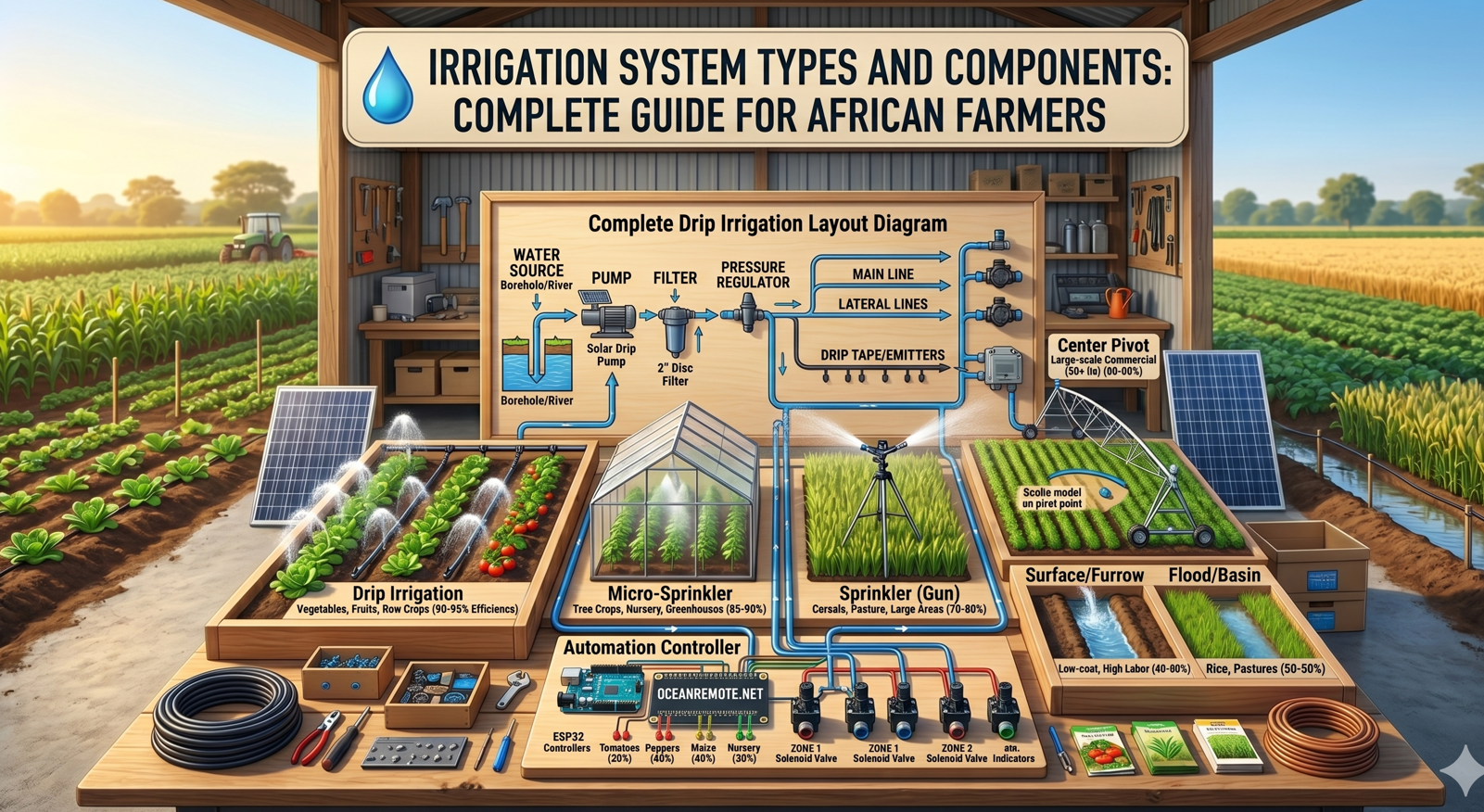
Irrigation System Types and Components
💧 Irrigation System Types and Components - Complete Guide for African Farmers
💧 What You'll Learn in This Lesson:
- 💧 Compare 8 irrigation system types for your specific farm
- 💰 Understand costs, water efficiency, and ROI for each system
- 🛠️ Learn all components needed for a complete irrigation system
- 💻 Build an ESP32-controlled automated irrigation system
- 🌾 Choose the right system for your crop, budget, and water source
📊 Complete Irrigation System Comparison
| System Type | Water Efficiency | Cost per Hectare | Labor Required | Best For | Automation Ready |
|---|---|---|---|---|---|
| 💧 Drip Irrigation | 90-95% (Highest!) | $800-2,000 | Low | Vegetables, fruits, row crops | ✅ Excellent |
| 💧 Micro-Sprinkler | 85-90% | $1,000-2,500 | Low | Tree crops, nursery, greenhouses | ✅ Excellent |
| 💧 Sprinkler (Gun) | 70-80% | $500-1,000 | Medium | Cereals, pasture, large areas | ✅ Good |
| 💧 Center Pivot | 80-85% | $5,000-10,000 | Very Low | Large-scale commercial (50+ ha) | ✅ Excellent |
| 💧 Surface/Furrow | 40-60% | $100-300 | High | Low-cost, suitable for slopes | ❌ Difficult |
| 💧 Flood/Basin | 30-50% | $50-150 | High | Rice, pastures | ❌ Difficult |
| 💧 Solar Drip | 90-95% | $1,500-3,000 | Very Low | Off-grid farms (no electricity) | ✅ Excellent |
| 💧 Gravity Drip | 85-90% | $200-500 | Low | Small plots, hillside farms | ✅ Good |
🌟 Recommendation for African Smallholders:
Drip irrigation + soil moisture sensors + ESP32 automation offers the best ROI:
- 💧 90-95% water efficiency (vs 40-60% for furrow)
- 📈 30-50% yield increase
- 💰 $800-1,500 initial investment per hectare
- 🔄 Payback period: 1-2 growing seasons
- 🔋 Can be solar-powered for off-grid farms
🛠️ Complete Irrigation System Components
1. Water Source
- Well/Borehole: Consistent supply, initial drilling cost $500-2000
- River/Stream: Free but seasonal variability
- Reservoir/Tank: Stores rainwater, sizes 5,000-50,000L
- Municipal: Reliable but ongoing cost
- Rainwater Harvesting: Sustainable, requires storage
2. Pump
- Submersible: For wells/boreholes, 0.5-5HP, $100-500
- Centrifugal: For surface water, 1-10HP, $80-300
- Solar Pump: Off-grid, 0.5-3HP, $300-1500
- Diaphragm: Low flow, high pressure for drip
- Pedal Pump: Human-powered, $50-100 for small plots
3. Filtration
- Screen Filter: 120-200 mesh for clean water, $20-50
- Disc Filter: Better for organic matter, $30-100
- Sand Filter: For dirty water sources, $100-300
- Hydrocyclone: Removes sand/silt, $80-200
- CRITICAL: Drip systems NEED filtration!
4. Pressure Regulator
- Drip Systems: Need 20-30 PSI (1.4-2.1 bar)
- Sprinklers: Need 30-50 PSI (2.1-3.5 bar)
- Cost: $15-40 each
- Without regulator: Emitters fail, uneven watering
5. Main & Sub-main Lines
- PVC Pipe: Rigid, 50-110mm diameter, $5-15/meter
- Polyethylene (PE): Flexible, 25-50mm, $2-8/meter
- HDPE: Heavy-duty, long life, $3-10/meter
- Size based on: Flow rate and distance
6. Control Valves
- Ball Valve: Manual on/off, $5-15
- Solenoid Valve: Electric, for automation, $15-40
- Gate Valve: Flow adjustment, $10-25
- Check Valve: Prevents backflow, $8-20
7. Drip Tape / Emitters
- Drip Tape: Flat, disposable, 0.5-2L/hour, $0.05-0.15/meter
- Drip Line: Round, reusable, 2-4L/hour, $0.10-0.30/meter
- Individual Emitters: For trees, 4-20L/hour, $0.20-0.50 each
- Spacing: 20-30cm for vegetables, 50-100cm for row crops
8. Automation Controller
- ESP32: WiFi, Bluetooth, 30+ GPIO, $5-10
- ESP8266: WiFi-only, cheaper, $3-6
- Relay Module: 4-16 channel, $6-25
- Soil Moisture Sensors: Capacitive type, $3-10 each
- Power Supply: 12V/2A for valves + 5V for ESP32
💧 Drip Irrigation - Detailed Design
📐 Drip System Design Formula:
Total Flow Rate (L/hour) = Number of Emitters × Emitter Flow Rate (L/hour)
Required Pump Size (HP) = (Flow Rate × Total Head) / (4500 × Pump Efficiency)
Example (1 hectare = 10,000m²):
- Plant spacing: 1m × 0.5m = 20,000 plants
- One emitter per plant @ 2L/hour → 40,000 L/hour total flow = 667 L/min
- 4" main line, 1.5HP pump, 25 PSI pressure regulator
🛠️ Complete Drip Irrigation Layout Diagram
═══════════════════════════════════════════════════════════════════════════════
                    COMPLETE DRIP IRRIGATION SYSTEM LAYOUT
═══════════════════════════════════════════════════════════════════════════════

    WATER SOURCE
        │
        ▼
    ┌───────────────┐
    │  PUMP         │  (Submersible/Centrifugal/Solar)
    │  1-5 HP       │
    └───────┬───────┘
            │
            ▼
    ┌───────────────┐
    │  FILTER       │  (Screen or Disc - 120-200 mesh)
    │  Backwash     │
    └───────┬───────┘
            │
            ▼
    ┌───────────────┐
    │  PRESSURE     │  (Set to 20-30 PSI for drip)
    │  REGULATOR    │
    └───────┬───────┘
            │
            ▼
    ┌───────────────┐     ┌───────────────┐     ┌───────────────┐
    │  ZONE 1       │     │  ZONE 2       │     │  ZONE 3       │
    │  SOLENOID     │────▶│  SOLENOID     │────▶│  SOLENOID     │
    │  VALVE        │     │  VALVE        │     │  VALVE        │
    └───────┬───────┘     └───────┬───────┘     └───────┬───────┘
            │                     │                     │
            ▼                     ▼                     ▼
    ┌───────────────┐     ┌───────────────┐     ┌───────────────┐
    │  MAIN LINE    │     │  MAIN LINE    │     │  MAIN LINE    │
    │  (50-75mm)    │     │  (50-75mm)    │     │  (50-75mm)    │
    └───────┬───────┘     └───────┬───────┘     └───────┬───────┘
            │                     │                     │
            ▼                     ▼                     ▼
    ┌───────────────┐     ┌───────────────┐     ┌───────────────┐
    │  LATERAL      │     │  LATERAL      │     │  LATERAL      │
    │  LINES        │     │  LINES        │     │  LINES        │
    │  (16mm)       │     │  (16mm)       │     │  (16mm)       │
    └───────┬───────┘     └───────┬───────┘     └───────┬───────┘
            │                     │                     │
            ▼                     ▼                     ▼
    ┌───────────────────────────────────────────────────────────┐
    │              DRIP TAPE / EMITTERS                         │
    │   ●  ●  ●  ●  ●  ●  ●  ●  ●  ●  ●  ●  ●  ●  ●  ●  ●   │
    │   Emitter spacing: 20-50cm depending on crop             │
    │   Flow rate: 0.5-4 L/hour per emitter                    │
    └───────────────────────────────────────────────────────────┘

═══════════════════════════════════════════════════════════════════════════════
    CONTROLLER: ESP32 + Relay Module + Soil Moisture Sensors
═══════════════════════════════════════════════════════════════════════════════
💻 ESP32 Automated Irrigation Controller Code
/* * Complete ESP32 Automated Drip Irrigation Controller * Controls 4 zones with soil moisture feedback * * Components: * - ESP32 Development Board * - 4-Channel 5V Relay Module * - 4 Soil Moisture Sensors (capacitive) * - 4 Solenoid Valves (12V/24V AC or DC) * - 12V/2A Power Supply for valves * - 5V/2A Power Supply for ESP32/Relays */ #include#include // ========== PIN DEFINITIONS ========== #define SOIL_ZONE1 32 #define SOIL_ZONE2 33 #define SOIL_ZONE3 34 #define SOIL_ZONE4 35 #define RELAY_ZONE1 5 #define RELAY_ZONE2 18 #define RELAY_ZONE3 19 #define RELAY_ZONE4 21 // ========== WIFI CONFIGURATION ========== const char* ssid = "YOUR_WIFI"; const char* password = "YOUR_PASSWORD"; // ========== SOIL CALIBRATION ========== const int DRY_VALUE = 3800; const int WET_VALUE = 1500; // ========== IRRIGATION THRESHOLDS ========== const float ZONE1_THRESHOLD = 35.0; // Start watering below 35% const float ZONE2_THRESHOLD = 40.0; const float ZONE3_THRESHOLD = 45.0; const float ZONE4_THRESHOLD = 30.0; const int WATER_DURATION = 600; // 10 minutes per zone const int DELAY_BETWEEN_ZONES = 5000; // 5 seconds pause // ========== ZONE STRUCTURE ========== struct Zone { int soilPin; int relayPin; const char* name; float threshold; }; Zone zones[] = { {SOIL_ZONE1, RELAY_ZONE1, "Tomatoes", ZONE1_THRESHOLD}, {SOIL_ZONE2, RELAY_ZONE2, "Peppers", ZONE2_THRESHOLD}, {SOIL_ZONE3, RELAY_ZONE3, "Maize", ZONE3_THRESHOLD}, {SOIL_ZONE4, RELAY_ZONE4, "Nursery", ZONE4_THRESHOLD} }; const int ZONE_COUNT = 4; // ========== READ SOIL MOISTURE ========== float readSoilMoisture(int pin) { int raw = analogRead(pin); float moisture = map(raw, DRY_VALUE, WET_VALUE, 0, 100); return constrain(moisture, 0, 100); } // ========== CONTROL SOLENOID VALVE ========== void waterZone(int zoneIndex, int durationSeconds) { Zone* z = &zones[zoneIndex]; Serial.printf("💧 Zone %d (%s): Starting irrigation for %d seconds\n", zoneIndex+1, z->name, durationSeconds); // Open valve (ACTIVE LOW relay) digitalWrite(z->relayPin, LOW); delay(durationSeconds * 1000); // Close valve digitalWrite(z->relayPin, HIGH); Serial.printf("✅ Zone %d (%s): Complete\n\n", zoneIndex+1, z->name); } // ========== IRRIGATION DECISION ========== bool needsWatering(Zone* z) { float moisture = readSoilMoisture(z->soilPin); Serial.printf(" %s: %.1f%% (threshold: %.0f%%) -> ", z->name, moisture, z->threshold); if (moisture < z->threshold) { Serial.println("NEEDS WATER"); return true; } else { Serial.println("OK"); return false; } } // ========== DISPLAY SYSTEM STATUS ========== void displayStatus() { Serial.println("\n╔══════════════════════════════════════════════════════════════╗"); Serial.println("║ 💧 IRRIGATION SYSTEM STATUS ║"); Serial.println("╚══════════════════════════════════════════════════════════════╝"); for (int i = 0; i < ZONE_COUNT; i++) { float moisture = readSoilMoisture(zones[i].soilPin); Serial.printf("\n📍 ZONE %d: %s\n", i+1, zones[i].name); Serial.printf(" 💧 Soil Moisture: %.1f%%\n", moisture); Serial.printf(" 🎯 Threshold: %.0f%%\n", zones[i].threshold); if (moisture < zones[i].threshold) { Serial.printf(" ⚠️ Status: BELOW THRESHOLD - Needs irrigation\n"); } else if (moisture > 70) { Serial.printf(" ✅ Status: OPTIMAL - Soil well watered\n"); } else { Serial.printf(" ✅ Status: ADEQUATE - No action needed\n"); } } } void setup() { Serial.begin(115200); // Configure relay pins for (int i = 0; i < ZONE_COUNT; i++) { pinMode(zones[i].relayPin, OUTPUT); digitalWrite(zones[i].relayPin, HIGH); // Start with valves CLOSED } // Configure soil sensor pins for (int i = 0; i < ZONE_COUNT; i++) { pinMode(zones[i].soilPin, INPUT); } // Connect to WiFi WiFi.begin(ssid, password); Serial.print("📡 Connecting to WiFi"); while (WiFi.status() != WL_CONNECTED) { delay(500); Serial.print("."); } Serial.println("\n✅ WiFi connected!"); Serial.println("═══════════════════════════════════════════"); Serial.println("💧 ESP32 AUTOMATED IRRIGATION CONTROLLER"); Serial.println(" 4-Zone Drip System with Soil Feedback"); Serial.println("═══════════════════════════════════════════\n"); displayStatus(); } void loop() { Serial.println("\n━━━━━━━━━━━━━━━━━━━━━━━━━━━━━━━━━━━━━━━━━━━━━"); Serial.println("🌾 STARTING IRRIGATION CYCLE"); Serial.println("━━━━━━━━━━━━━━━━━━━━━━━━━━━━━━━━━━━━━━━━━━━━━"); bool anyIrrigated = false; for (int i = 0; i < ZONE_COUNT; i++) { if (needsWatering(&zones[i])) { waterZone(i, WATER_DURATION); anyIrrigated = true; delay(DELAY_BETWEEN_ZONES); } } if (!anyIrrigated) { Serial.println("✅ All zones have adequate moisture - No irrigation needed\n"); } // Update display displayStatus(); // Send data to OceanRemote cloud sendToCloud(); // Wait 6 hours before next check (adjust as needed) Serial.println("⏰ Waiting 6 hours until next irrigation cycle...\n"); delay(21600000); } // ========== SEND DATA TO OCEANREMOTE CLOUD ========== void sendToCloud() { if (WiFi.status() != WL_CONNECTED) return; HTTPClient http; http.begin("https://api.oceanremote.net/device/state"); http.addHeader("Content-Type", "application/x-www-form-urlencoded"); String data = "token=YOUR_TOKEN"; for (int i = 0; i < ZONE_COUNT; i++) { float moisture = readSoilMoisture(zones[i].soilPin); data += "&zone" + String(i+1) + "_moisture=" + String(moisture); } int httpCode = http.POST(data); if (httpCode == 200) { Serial.println("✅ Data sent to OceanRemote dashboard"); } http.end(); }
📖 Case Study - Kenyan Farm Converts to Drip Irrigation:
A 2-hectare vegetable farm in Thika, Kenya switched from furrow to drip irrigation:
- 💧 Before: Furrow irrigation, 15,000L/day, 40% efficiency
- 💧 After: Drip system with ESP32 automation, 6,000L/day, 92% efficiency
- 💰 Cost: $1,800 for materials + $200 for ESP32/valves
- 📈 Yield increase: 45% (tomatoes, peppers, cabbage)
- 💵 Payback period: 8 months! (Water savings + increased yield)
"The drip system paid for itself in less than a year. Best investment we ever made." - Farm Owner, Thika, Kenya
💡 Pro Tips for System Selection:
- 📍 Small plot (<0.5 ha): Gravity drip or battery-powered drip (lowest cost)
- 📍 Medium farm (0.5-5 ha): Electric drip + ESP32 automation + solar optional
- 📍 Large farm (>5 ha): Center pivot or large sprinkler + automation
- 📍 Tree crops: Micro-sprinklers or individual emitters
- 📍 Off-grid: Solar pump + gravity tank + drip (most reliable)
⚠️ Common System Failures & Prevention:
- Clogged emitters (90% of failures): Install adequate filtration + flush lines monthly
- Burst pipes (freezing/overpressure): Use pressure regulator + drain system
- Pump burnout (running dry): Install low-water cutoff sensor
- Valve failure (debris): Install Y-strainer before each valve
- ESP32 reset (power issues): Use separate power supply for relays
🎉 Congratulations!
You can now design and build a complete automated irrigation system!
- ✅ Compare 8 irrigation system types with costs and efficiency
- ✅ Identify all 20+ components needed for a complete system
- ✅ Design a drip system layout for your specific farm
- ✅ Build an ESP32-controlled 4-zone automated system
- ✅ Achieve 90-95% water efficiency + 30-50% yield increase
Next step: Add soil moisture sensors for fully automated feedback!
📋 Quick Reference - Component Sizing:
┌─────────────────────────────────────────────────────────────────────────────┐
│                    COMPONENT SIZING GUIDE (1 HECTARE)                       │
├─────────────────────────────────────────────────────────────────────────────┤
│                                                                             │
│  DRIP SYSTEM:                                                               │
│  • Emitters: 20,000-30,000 (2L/hour each)                                  │
│  • Flow rate: 40,000-60,000 L/hour (660-1000 L/min)                       │
│  • Main line: 63-75mm HDPE or PVC                                          │
│  • Laterals: 16mm PE (10,000-15,000 meters)                                │
│  • Pump: 2-3 HP (centrifugal) or 1.5-2 HP (submersible)                    │
│  • Filter: 2" disc or screen (120-150 mesh)                                │
│  • Pressure regulator: 25 PSI, 1000 L/min capacity                         │
│                                                                             │
│  SPRINKLER SYSTEM:                                                          │
│  • Sprinklers: 40-60 (2-3 bar operating pressure)                          │
│  • Spacing: 12m × 15m (rectangular pattern)                                │
│  • Flow rate: 30,000-40,000 L/hour                                         │
│  • Pump: 3-5 HP                                                             │
│  • Main line: 75-90mm HDPE                                                  │
│                                                                             │
│  AUTOMATION:                                                                │
│  • Solenoid valves: 4-8 (12V DC latching recommended)                      │
│  • Soil sensors: 4-8 (capacitive type)                                     │
│  • Controller: ESP32 + 8-channel relay module                              │
│  • Power supply: 12V/5A (valves + ESP32)                                   │
│                                                                             │
└─────────────────────────────────────────────────────────────────────────────┘
💡 Key Takeaways:
- Apply these concepts directly to your farm or project.
- Take notes on important details for the quiz.
- Use the button below to track your progress.
×
![Enlarged view]()