← Back to Course
Soil Temperature Basics
🌡️ Understanding Soil Temperature - The Hidden Factor for Crop Success
🌡️ What You'll Learn:
- 🌱 Understand how soil temperature affects seed germination and root growth
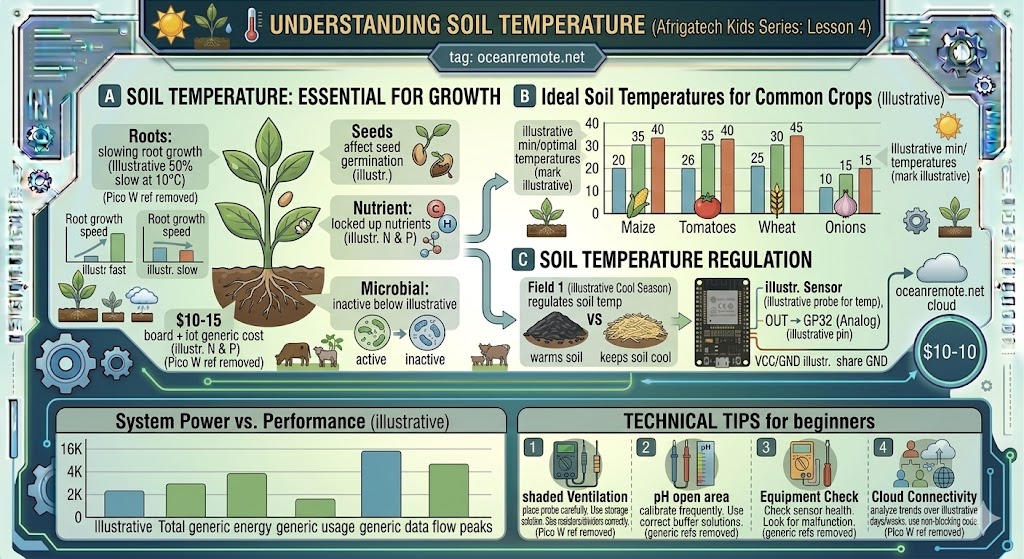
- 📊 Learn ideal soil temperature ranges for maize, tomatoes, wheat, and onions
- 🔥 Discover why cold soil locks up nutrients and slows plant growth by 50%
- 🛠️ Use mulch and other techniques to regulate soil temperature naturally
Soil temperature affects seed germination, root growth, nutrient uptake, and microbial activity. Different crops need different soil temperatures to thrive. Ignoring soil temperature can reduce yields by 30-50% even with perfect watering and fertilizer!
📊 Ideal Soil Temperatures for Common Crops
- 🌽 Maize (Corn): Min 10°C | Optimal 18-30°C | Max 40°C
- 🍅 Tomatoes: Min 15°C | Optimal 20-25°C | Max 35°C
- 🌾 Wheat: Min 4°C | Optimal 12-25°C | Max 35°C
- 🧅 Onions: Min 10°C | Optimal 15-25°C | Max 35°C
- 🥔 Potatoes: Min 7°C | Optimal 15-20°C | Max 30°C
- 🌶️ Peppers: Min 15°C | Optimal 20-28°C | Max 35°C
- 🥬 Cabbage: Min 5°C | Optimal 15-20°C | Max 30°C
- 🥕 Carrots: Min 5°C | Optimal 15-20°C | Max 30°C
- 🌿 Beans: Min 15°C | Optimal 18-25°C | Max 35°C
- 🍆 Eggplant: Min 15°C | Optimal 22-28°C | Max 35°C
💡 The 10°C Rule:
Most warm-season crops (tomatoes, peppers, maize) need soil temperature above 15°C to germinate. Cool-season crops (wheat, cabbage, carrots) can germinate at 5-10°C. Planting seeds in cold soil = wasted seeds and delayed harvest.
🔥 Why Soil Temperature Matters
- 🌱 Germination: Seeds won't sprout if soil is too cold - they rot instead of growing
- 🌿 Root Development: Cold soil slows root growth by 50% or more - shallow roots mean weak plants
- 🧪 Nutrient Availability: Cold soil locks up nitrogen and phosphorus - fertilizer becomes unavailable
- 🦠 Microbial Activity: Beneficial soil bacteria are inactive below 10°C - no organic matter breakdown
- 💧 Water Uptake: Cold soil reduces water absorption - plants wilt even when soil is wet
- 🌸 Flowering & Fruiting: Temperature extremes cause blossom drop in tomatoes and peppers
📖 Case Study - Planting Too Early Reduces Yield:
A maize farmer planted 2 weeks early when soil temperature was only 12°C:
- 🌱 Result: Slow germination, uneven emergence (30% of seeds failed)
- 🌿 Root development: Shallow roots, plants fell over in wind
- 📊 Yield: 2.5 tons/hectare vs normal 5 tons/hectare (50% loss)
- ✅ Next season: Waited for soil to reach 18°C
- 📈 Result: Full germination, 5.2 tons/hectare yield
"Waiting 2 weeks for warmer soil doubled my harvest. Patience pays!" - Maize Farmer, Kenya
🌡️ How to Measure Soil Temperature
- DS18B20 waterproof sensor ($5): Insert 10-20cm deep, reads accurately
- Soil thermometer ($10-15): Manual option, probe type
- When to measure: Early morning (minimum) and mid-afternoon (maximum)
- Depth matters: Measure at seed depth (5cm) and root depth (15cm)
⚠️ Soil Temperature Problems & Solutions:
- ❄️ Too cold (< 10°C): Use dark plastic mulch to absorb heat, delay planting, plant raised beds
- 🔥 Too hot (> 35°C): Use light-colored straw mulch to reflect heat, increase irrigation, shade cloth
- 📉 Sudden drop: Cover with row covers at night, irrigate before frost
- 📈 Sudden spike: Increase irrigation frequency by 50% to cool soil
💡 Using Mulch to Regulate Soil Temperature:
- 🌞 Dark mulch (black plastic): Absorbs heat, warms soil by 3-5°C - best for cool seasons
- 🌾 Light mulch (straw, hay): Reflects heat, keeps soil cool by 3-8°C - best for hot summers
- 🌿 Living mulch (cover crops): Natural temperature regulation, adds organic matter
- Apply mulch after: Soil reaches desired temperature (don't apply too early)
🎯 Key Takeaways:
- ✅ Soil temperature affects germination, roots, nutrients, and microbes
- ✅ Maize needs 18-30°C, tomatoes need 20-25°C for optimal growth
- ✅ Planting in cold soil (< 15°C) reduces yields by 30-50%
- ✅ Cold soil locks up nitrogen and phosphorus - fertilizer wasted!
- ✅ Use dark mulch to warm soil in cool seasons, light mulch to cool in hot seasons
- ✅ Measure soil temperature at 10-15cm depth for best results
Next step: Install a DS18B20 soil temperature sensor with your ESP32!
💡 Key Takeaways:
- Apply these concepts directly to your farm or project.
- Take notes on important details for the quiz.
- Use the button below to track your progress.
×
![Enlarged view]()